
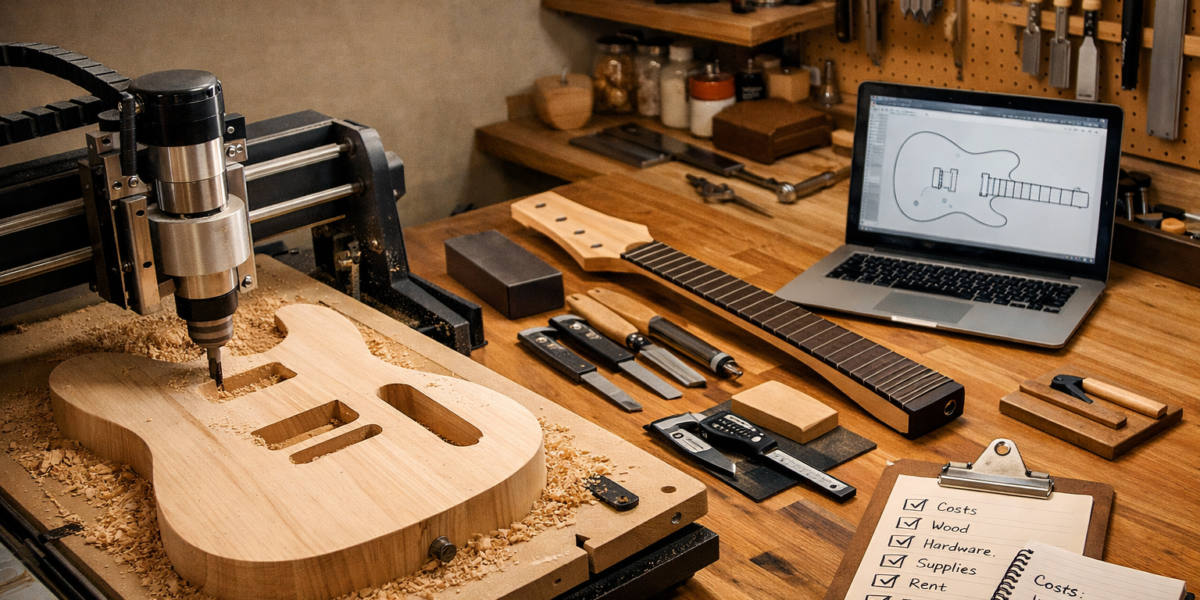
Starting a CNC-assisted luthiery shop is not about buying a machine and pressing “make guitar.”
It’s about building a repeatable process where precision machining and hand craftsmanship work together.
If you do that, you can produce consistent, high-quality instruments without scaling into factory mode.
What “CNC-Assisted” Actually Means
A healthy small-shop model usually looks like this:
- CNC handles repeatable geometry (pockets, routes, fret slots, rough profiles)
- Handwork handles refinement (neck feel, fretwork, nut, finish, setup)
- QC gates catch issues before they stack
That hybrid workflow is where small builders can compete on quality and consistency.
Step 1: Define Your Product Scope (Before Buying Tools)
Don’t start with “I’ll build everything.”
Start with:
- 1–2 body styles
- 1–2 neck profiles
- 1 scale length (or two max)
- limited bridge/pickup options
- clear finish menu
Reducing variables early is the fastest path to reliable output.
Step 2: Minimum Tool Stack
CNC + digital
- CNC router (hobby-pro or prosumer class)
- CAD/CAM software
- Dust collection
- Workholding/jigs
- Calipers and measurement tools
Core luthiery
- Fret tools (level, crown, polish)
- Nut files
- Drill press (strongly recommended)
- Clamps, sanding blocks, scrapers
- Soldering station + multimeter
- Setup tools (straightedge, feeler gauges, action ruler)
Finish
- Ventilated finishing area
- Spray system or wipe-on workflow
- PPE and safety controls
Step 3: Budget Tiers (Reality Check)
Lean startup (~$5k–$12k)
- Entry CNC
- Basic tooling
- limited finishing setup
- slower throughput, more manual labor
Serious small shop (~$12k–$30k)
- Better CNC rigidity/repeatability
- stronger dust extraction
- better fret/finish tooling
- higher consistency and efficiency
Advanced boutique (~$30k+)
- premium CNC + fixtures
- expanded finishing and QC infrastructure
- cleaner process scaling
You can start lean, but don’t under-budget dust collection, measurement, or fret tools.
Step 4: Build a Repeatable Workflow
Typical order:
- Wood selection and moisture check
- CNC machining (body/neck geometry)
- Neck fitting and dry assembly checks
- Fretwork
- Finish prep + finishing + cure
- Hardware/electronics install
- Nut work + full setup
- Final QC + play test + documentation
Every stage should have pass/fail criteria.
Step 5: Establish QC Gates
At minimum, define measurable checks for:
- Neck pocket fit
- Centerline/bridge alignment
- Fret level tolerance
- Nut slot height range
- Action and relief targets
- Intonation accuracy
- Electrical noise/function tests
If you can’t measure it, you can’t improve it reliably.
Step 6: Price Like a Business, Not a Hobby
Your price must cover:
- materials
- machine wear/consumables
- labor time (all steps, not just assembly)
- rejects/rework
- overhead (rent/power/software)
- warranty support
- profit margin
Underpricing to “get traction” usually creates burnout and quality collapse.
Step 7: Start With Small Batches
Build in batches of 2–5, not one-off chaos.
Batching benefits:
- more consistent outcomes
- better time efficiency
- faster process learning
- easier inventory planning
Track build time per stage and refine after each batch.
Step 8: Document Everything
For each instrument, record:
- wood details
- neck/profile specs
- fretwire type
- electronics config
- setup measurements at ship time
- final QC notes
This improves support, repeatability, and buyer trust.
Step 9: Avoid Early-Stage Trap Decisions
- Too many custom options too soon
- Fancy finishes before core process is stable
- Ignoring fixture/jig quality
- Treating fretwork as an afterthought
- Marketing hard before QC is predictable
You’re building a process first, a brand second.
Step 10: What Actually Builds Reputation
Not CNC ownership. Not social media gloss.
Reputation comes from:
- consistent fretwork
- stable tuning/playability
- clean setup out of the case
- honest communication
- reliable support after sale
Players remember how a guitar feels longer than how it looked on launch day.
Bottom Line
A small CNC-assisted luthiery shop can absolutely produce serious instruments.
The winning formula is:
- tight product scope
- repeatable workflow
- measurable QC
- skilled hand refinement
- disciplined pricing
Do that, and CNC becomes what it should be: a precision partner, not a shortcut.