
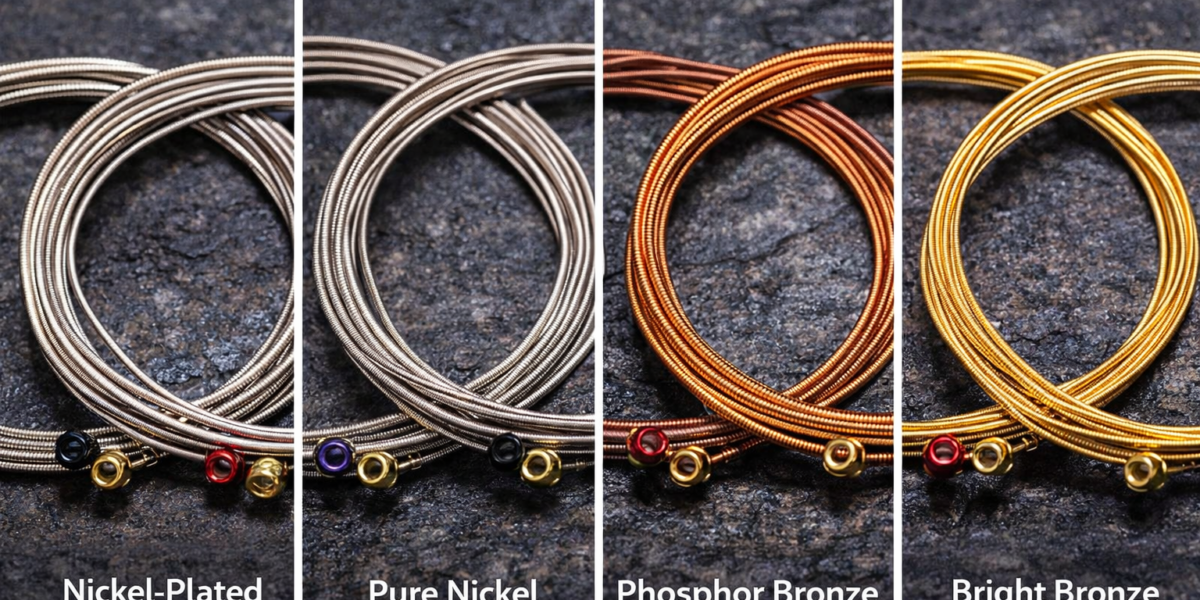
Strings are the cheapest major tone upgrade you can make.
If your guitar feels stiff, sounds dull, or won’t stay in tune, strings are often the first fix—not pickups, not pedals, not panic buying.
Here’s what actually matters: quality, gauge, and material.
1) String Quality: Why It Matters More Than People Think
“Quality” means consistency and durability, not branding hype.
Higher-quality strings usually give you:
- better tuning stability
- more consistent intonation
- fewer dead/odd-feeling strings in a set
- longer usable tone life
Low-quality strings can feel rough, oxidize quickly, or lose brightness fast.
Signs your strings are done
- dull/flat tone
- tuning drift
- poor intonation feel
- rough or sticky feel
- visible corrosion/discoloration
Old strings make everything else feel worse.
2) Gauge (String Thickness): The Feel/Tone Tradeoff
Gauge changes tension, feel, and response more than many players realize.
Common electric sets
- .009–.042: easy bends, lighter touch, brighter feel
- .010–.046: balanced, popular all-around set
- .011+: more tension, fuller feel, stronger attack
Common acoustic sets
- .011/.012 light: easier fretting, comfortable
- .013 medium: fuller projection, more resistance
What heavier gauges usually do
- increase tension
- feel firmer
- can improve tuning stability for aggressive picking
- can add perceived fullness
What lighter gauges usually do
- easier bends/vibrato
- lower fretting effort
- faster feel
- potentially more pitch movement if over-fretting
Neither is “better.” Match gauge to your hands and style.
3) String Material: Core Tone Character
Electric guitar materials
Nickel-plated steel (most common)
- balanced highs/mids
- versatile for most genres
- familiar feel and response
Pure nickel
- warmer, smoother top end
- vintage-style tone preference
Stainless steel
- brighter, snappier attack
- often longer life
- can feel stiffer/rougher to some players
Acoustic guitar materials
80/20 bronze
- bright, crisp, lively attack
- can lose top-end sparkle faster
Phosphor bronze
- warmer and fuller mids
- often longer “pleasant life” than 80/20
Silk & steel
- softer feel, mellow tone
- lower tension response
Coated vs Uncoated Strings
Coated
- longer lifespan
- more resistance to sweat/corrosion
- slightly different feel/tone (depends on brand/coating type)
Uncoated
- traditional feel
- often very lively when fresh
- usually shorter lifespan
If your hands corrode strings quickly, coated strings can save money and frustration.
String Choice by Use Case (Quick Guide)
- Lead-heavy electric, easy bends: .009 or .010 nickel-plated
- Rhythm rock/metal stability: .010 or .011, tighter low end set
- Fingerstyle acoustic comfort: .011/.012 phosphor bronze
- Aggressive acoustic strumming: .012/.013 depending on guitar setup
- Sweaty hands / long life need: coated sets
Important: Setup Must Match String Changes
Changing gauge affects:
- neck relief
- action feel
- intonation
- sometimes nut slot behavior
If you jump from .009 to .011 (or similar), expect to recheck setup.
Many “new strings feel bad” problems are setup mismatch.
Common String Myths
- “Heavier strings always sound better.”
Not always. They may sound worse if they fight your technique. - “Expensive strings are always worth it.”
Only if they improve consistency/lifespan for your use case. - “Tone is all in strings.”
Strings matter a lot, but so do setup, pickups, amp, and touch.
Practical String Routine
- Wipe strings after playing
- Change before major sessions/gigs
- Keep one spare set in case/bag
- Track what worked (gauge/material/brand) instead of guessing every time
Consistency beats endless experimentation.
Bottom Line
If your guitar feels wrong, start with strings:
- choose gauge for your hands
- choose material for your tone goals
- choose quality for consistency
- recheck setup after gauge changes
A smart string choice can make your guitar feel “new” in 10 minutes.