
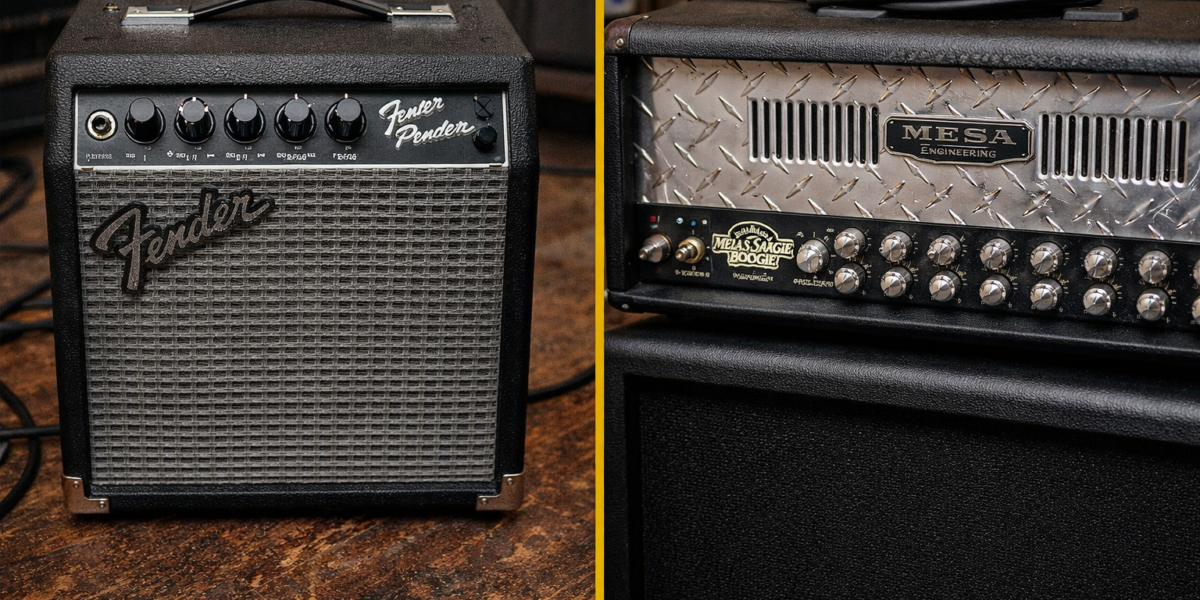
The tube vs solid-state argument has generated more heat than light for decades.
So here’s the practical truth: both can sound excellent, both can sound awful, and the “best” choice depends more on your use case than internet mythology.
Short Answer
- Tube amps: dynamic feel, organic breakup, often heavier/louder/more maintenance
- Solid-state amps: reliable, practical, usually lighter/cheaper, often great at low-volume consistency
If you play mostly at home, rehearse occasionally, and want low-maintenance reliability, solid-state is often the smarter choice.
If your style depends heavily on power-stage feel and edge-of-breakup interaction, tube can still be special.
Tone and Feel (The Real Difference)
Tube Amp Feel
Players often describe tube amps as:
- more “elastic” under the fingers
- touch-responsive when pushed
- smoother clipping and harmonic bloom
At moderate-to-loud volume, this feel can be addictive.
Solid-State Feel
Modern solid-state amps can be:
- very clear and immediate
- consistent at any volume
- excellent pedal platforms
Old stereotypes (“sterile,” “harsh”) are less true with good modern designs.
Volume Reality Check
Tube amps often sound best when working hard — which can be too loud for home use.
Solid-state amps often keep their character better at bedroom levels, making them far easier for:
- apartments
- late-night practice
- low-volume recording
If your life requires volume control, this is a huge practical advantage.
Reliability and Maintenance
Tube
- Tubes wear out
- Biasing/service may be required (amp-dependent)
- More heat, more maintenance points
Solid-State
- Typically lower maintenance
- Fewer consumable parts
- Often more “grab-and-go dependable”
If you gig frequently and need consistency with minimal fuss, solid-state can be a workhorse.
Weight, Portability, Cost
Tube combos/heads are often:
- heavier
- more fragile in transport
- more expensive to buy and maintain
Solid-state rigs are often:
- lighter
- cheaper
- easier to replace/backup
If you carry your own gear up stairs at 1am, this matters more than forum lore.
Pedals and Platform Use
- Tube amps often pair beautifully with drives pushing already-lively front ends
- Solid-state amps often excel as clean, stable pedal platforms
Neither is “better.” The chain and settings matter more.
Recording and Live Context
In a full mix, many subtle amp differences shrink fast.
Mic choice, speaker, EQ, and performance often matter more than amp technology alone.
Audience members rarely care whether your amp has tubes. They care whether you sound good.
Common Myths
- “Tube always sounds better.”
Not always. Context, volume, speaker, and player matter. - “Solid-state can’t do feel.”
Outdated take. Many modern designs feel great. - “You need tube for pro tone.”
Plenty of pro recordings/tours use solid-state/modeling rigs.
Who Should Choose Tube?
Choose tube if:
- You love edge-of-breakup interaction
- You can use enough volume to feel the amp work
- You’re okay with maintenance and weight
- You specifically want that response under your hands
Who Should Choose Solid-State?
Choose solid-state if:
- You need reliable, low-maintenance consistency
- You play mostly at controlled volumes
- You want portability and lower cost
- You rely on pedals and clean headroom
Bottom Line
This isn’t religion. It’s tools.
Choose the amp that fits your volume, budget, transport, maintenance tolerance, and musical goals — not someone else’s nostalgia.
If it sounds good and makes you play more, it’s the right amp.