
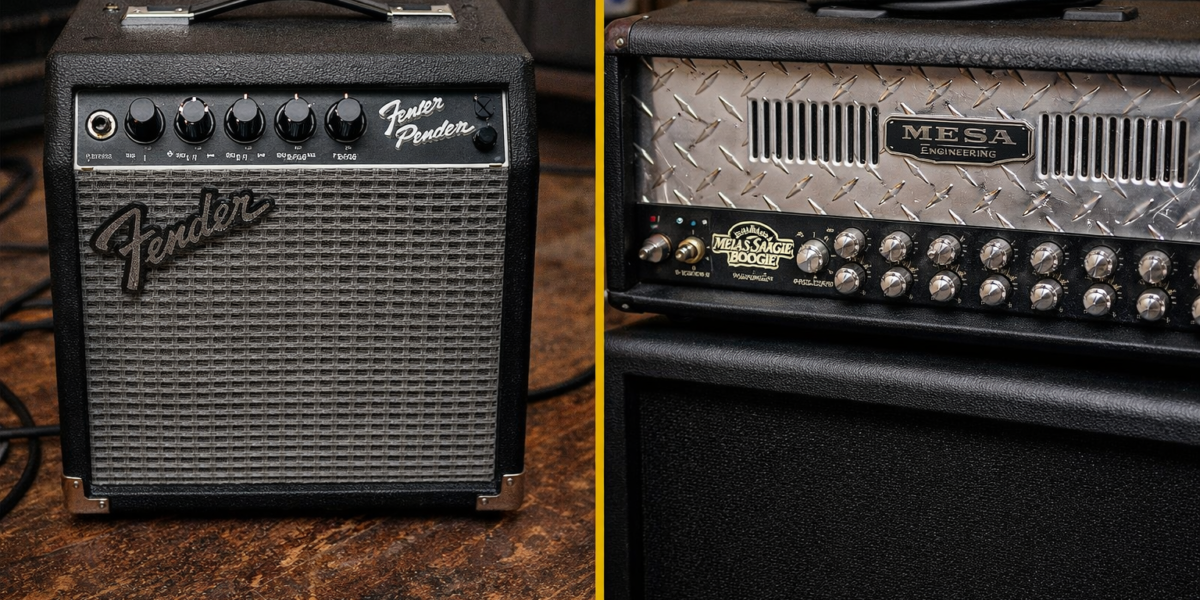
Buying your first “serious” amp can get expensive fast if you chase hype instead of use case.
This guide keeps it simple: what to prioritize at $200, $500, and $1000 so you get an amp you’ll actually use.
The goal isn’t prestige. It’s tone + reliability + fit for your life.
Before Budget: Define Your Use Case
Ask first:
- Mostly bedroom/home?
- Rehearsals with drummer?
- Small gigs?
- Pedal-heavy setup?
- Need headphone/silent practice?
Your answers matter more than tube-vs-solid-state tribalism.
$200 Budget: Home Practice Priority
At this tier, prioritize:
- good core clean + gain tones at low volume
- headphone output
- usable EQ
- reliability over feature overload
What to avoid
- Underpowered “mini” amps that sound boxy
- Paying for gimmicks instead of speaker quality
- Expecting gig volume authority
Best strategy
Buy a solid, simple practice amp you’ll keep as a forever home/back-up amp.
$500 Budget: Sweet Spot for Most Players
This is where value jumps hard.
Prioritize:
- better speaker and cabinet quality
- louder clean headroom
- pedal compatibility
- footswitch capability (if needed)
What this budget can do well
- serious home use
- rehearsal-ready volume (model-dependent)
- small gig viability for many styles
Biggest mistake at $500
Buying a flashy amp with weak fundamentals instead of a boringly good one.
$1000 Budget: Choose Your “Main Amp” Lane
At this budget, decide what you actually want:
- High-quality solid-state/modern platform (practical, reliable, consistent), or
- Entry-to-mid tube setup (feel-focused, maintenance accepted)
Prioritize:
- speaker quality first
- usable master volume behavior
- effects loop (if your rig needs it)
- weight/portability realities
What to avoid
- Overspending on wattage you can’t use
- Buying tube for identity if your environment forces low volume all the time
Feature Priority by Budget (Quick Table)
Must-have at any budget
- Good basic clean tone
- Usable EQ
- Reliable build
- Noise floor that isn’t annoying
Nice-to-have
- Effects loop (more useful above beginner stage)
- Footswitchable channels
- Headphone/USB out (home/studio convenience)
- Lightweight cabinet
Home vs Rehearsal vs Gig: Budget Fit
- $200: home-focused, learning/practice
- $500: best all-around value, many players’ long-term sweet spot
- $1000: serious main-rig territory if chosen for your actual use case
Smart Buying Checklist
Before you buy:
- Play at your real volume level, not store volume
- Bring your own guitar if possible
- Test clean + gain + edge-of-breakup
- Check noise with guitar volume up and down
- Evaluate weight and carry comfort
- Verify return policy
“No Regret” Rules
- Don’t buy wattage you can’t use
- Don’t buy complexity you won’t touch
- Don’t ignore speaker quality
- Don’t buy from internet ego pressure
- Buy the amp that makes you practice more
Upgrade Path That Actually Works
If money is tight:
- Buy a reliable amp in your real use-case range
- Learn EQ and gain staging deeply
- Add pedals later based on specific needs
- Upgrade only when you can clearly describe what’s missing
That path beats random gear hopping every time.
Bottom Line
- $200: get a dependable home amp, keep it simple
- $500: best value zone for most players
- $1000: buy a true main amp based on use case, not mythology
The right first amp isn’t the loudest or most expensive.
It’s the one you’ll still be happy to turn on every day.
Related Articles
- Tube vs Solid-State for Home, Studio, and Gigging: A Use-Case Buying Guide
- Tube Amps vs Solid-State Amps: What Actually Matters for Real Players
- Best Pickup Type by Genre (With Amp Setting Starting Points)