
Choosing pickups is easier when you start with music style, not marketing.
Here’s a practical guide to which pickup types typically work best by genre, plus amp starting points to get in the zone fast.
These are starting points, not rules. Your hands and rig matter more than labels.
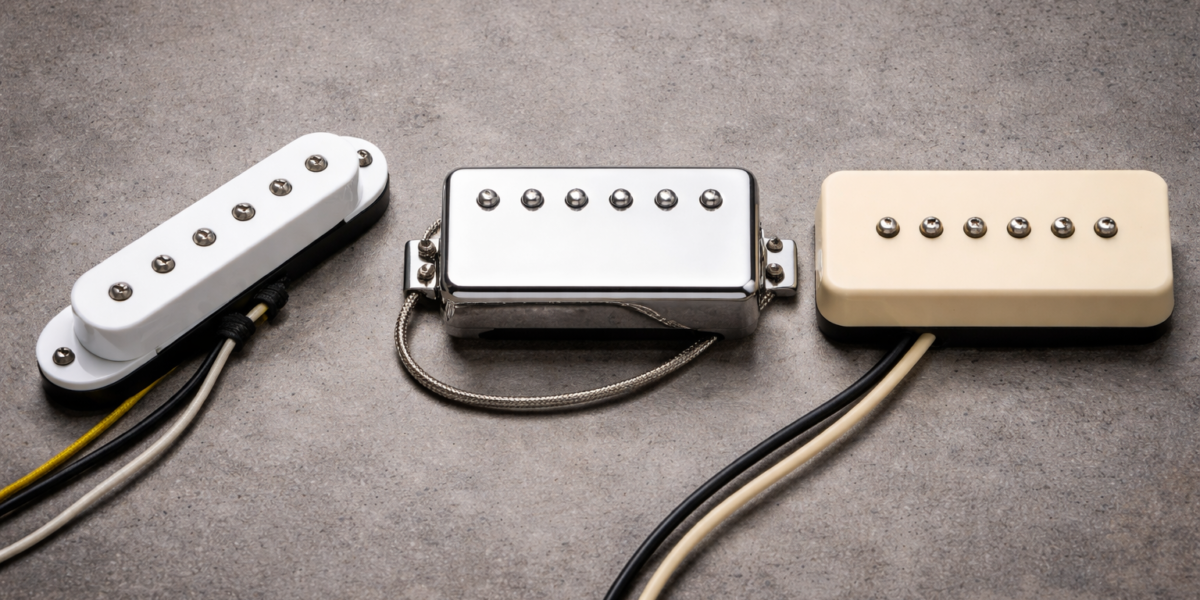
Quick Pickup Personality Recap
- Single-coil: bright, clear, articulate, noisier
- Humbucker: thick, smooth, higher output, quieter
- P90: punchy mids, raw edge, dynamic, some hum
Genre Guide + Amp Starting Points
1) Blues
Best fit: P90 or lower-output humbucker
Also great: Strat-style single-coils for glassy cleans
Why: You want touch response and expressive breakup.
Amp starting point (edge-of-breakup):
- Gain: 4–5
- Bass: 4–5
- Mid: 6
- Treble: 5–6
- Presence: 4–5
Tip: Roll guitar volume back for cleaner phrases.
2) Classic Rock
Best fit: Humbucker or P90
Also works: Bridge single-coil + boosted mids
Why: Thick riffs, singing leads, manageable noise floor.
Amp starting point (classic crunch):
- Gain: 5–6
- Bass: 5
- Mid: 6–7
- Treble: 5
- Presence: 5
Tip: If humbuckers sound muddy, lower bass and raise presence before blaming pickups.
3) Hard Rock / Metal
Best fit: Humbucker (usually medium/high output)
Sometimes: active humbuckers
Why: Tight low end, less hum, strong sustain under gain.
Amp starting point (high gain rhythm):
- Gain: 6–7 (not max)
- Bass: 4–5
- Mid: 4–6 (don’t scoop too hard)
- Treble: 5–6
- Presence: 5–6
Tip: Tightness comes from less gain + better picking, not max distortion.
4) Funk / Pop Clean
Best fit: Single-coil
Alternative: split-coil humbucker if noise is a problem
Why: Fast attack, sparkle, percussive clarity.
Amp starting point (clean):
- Gain: 2–3
- Bass: 4
- Mid: 5
- Treble: 6–7
- Presence: 5–6
Tip: Compression helps consistency for rhythmic strumming and muted patterns.
5) Country
Best fit: Single-coil (especially Tele bridge style)
Alternative: bright P90 for thicker twang
Why: Snap, bite, and note separation.
Amp starting point (clean with bite):
- Gain: 3
- Bass: 4
- Mid: 5
- Treble: 6–7
- Presence: 6
Tip: Keep low end controlled so chicken-pickin’ stays tight.
6) Indie / Alternative
Best fit: Single-coil or P90
Alternative: lower-output humbucker for broader palette
Why: Genre rewards character, texture, and dynamic contrast.
Amp starting point (versatile edge):
- Gain: 4–5
- Bass: 5
- Mid: 5–6
- Treble: 5–6
- Presence: 5
Tip: Let pedals shape flavor; pickups provide core voice.
7) Punk / Garage
Best fit: P90 or humbucker
Why: Mid punch, aggression, and simple “plug in and hit it” response.
Amp starting point (raw crunch):
- Gain: 5–6
- Bass: 5
- Mid: 6–7
- Treble: 5
- Presence: 5
Tip: P90s give a great dirty snarl without over-compression.
8) Jazz / Fusion
Best fit: Neck humbucker
Also useful: warm P90 for articulate mids
Why: Rounded highs, full fundamental, smooth lines.
Amp starting point (clean/warm):
- Gain: 2–3
- Bass: 5
- Mid: 6
- Treble: 4–5
- Presence: 3–4
Tip: Roll tone control down slightly before over-EQ’ing the amp.
9) Worship / Ambient
Best fit: Single-coil or low-output humbucker
Why: Clarity for delays/reverbs, controlled noise depending on venue.
Amp starting point (clean platform):
- Gain: 2–3
- Bass: 4–5
- Mid: 5
- Treble: 6
- Presence: 5
Tip: Keep pickups a little lower for cleaner transients into wet effects.
Don’t Skip This: Pickup Height Tuning
Before swapping pickups, adjust height:
- Too close = boomy, harsh, magnetic pull artifacts
- Too far = weak output, less attack
A small height change often does more than people expect.
Best “Do-It-All” Configs
If you play multiple genres:
- HSS Strat (most flexible mainstream setup)
- HH with coil-splits (good compromise)
- P90 bridge + humbucker neck (character + warmth)
Final Take
Pickups should match your music, touch, and noise tolerance.
If you want:
- clarity and snap → single-coil
- thickness and control → humbucker
- raw personality and punch → P90
Then fine-tune with setup, pickup height, and amp EQ.
That’s where “good tone” becomes your tone.
Related Posts
- Single-Coil vs Humbucker vs P90: What’s the Real Difference?
- Does Tonewood Matter on Electric Guitar? A Practical, No-Hype Answer
- How to Set Up a Steel-String Electric Guitar (Beginner Luthiery Guide)