
Eric Clapton is one of the most influential and celebrated guitarists in rock and blues history. With a career spanning over six decades, Clapton’s innovative guitar work, soulful voice, and deep connection to the blues have left an indelible mark on music. His ability to blend raw emotion with technical mastery has made him a legend, earning him the nickname “Slowhand” and cementing his place as one of the greatest guitarists of all time.
This detailed exploration of Eric Clapton’s life, music, techniques, influences, and legacy will give insight into why he remains such an enduring figure in the world of guitar-driven music.
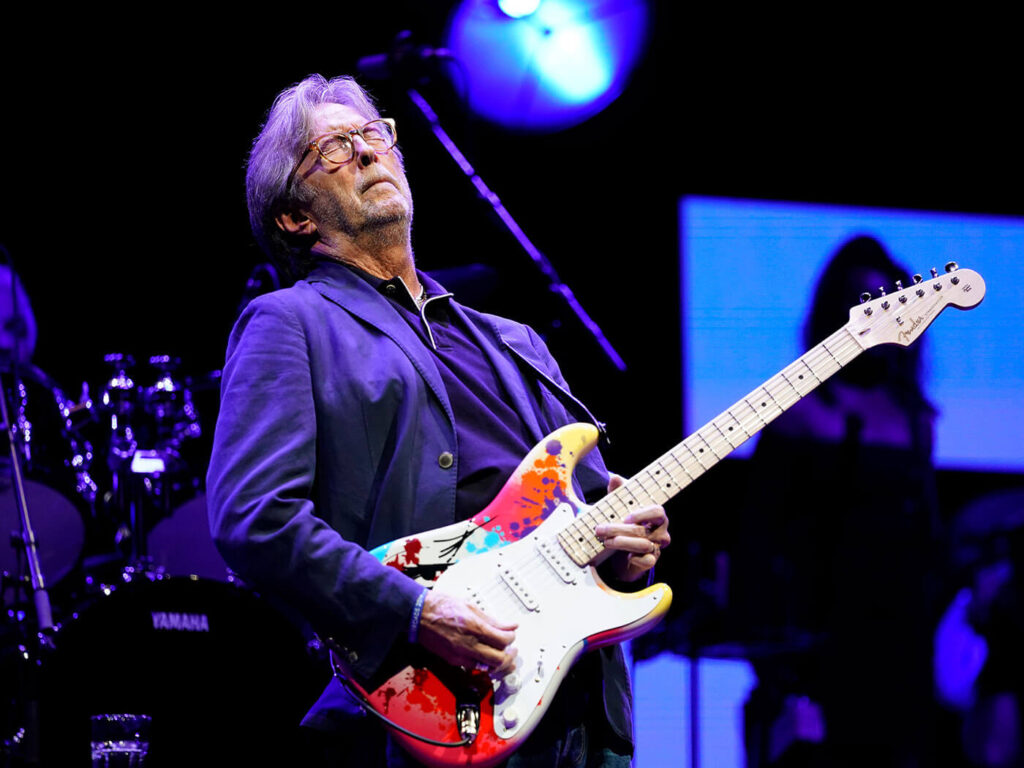
1. Early Life and Musical Beginnings
Childhood and Upbringing
Eric Patrick Clapton was born on March 30, 1945, in Ripley, Surrey, England. His early life was marked by a shocking discovery—he was raised believing his grandparents were his parents and that his actual mother was his older sister. When he learned the truth, it had a profound emotional impact on him, which later influenced the deep, soul-searching quality of his music.
Clapton showed an early interest in music, particularly blues, after being influenced by artists like Robert Johnson, Muddy Waters, and B.B. King. He received his first guitar at the age of 13 and, despite initial struggles, taught himself to play by listening to records and imitating his heroes.
Early Musical Influences
Clapton became obsessed with American blues music, particularly the raw, emotional playing of Robert Johnson, Son House, and Freddie King. He later cited Robert Johnson’s haunting voice and slide guitar work as a massive influence, shaping his approach to music and his ability to infuse deep feeling into every note.
2. The Rise to Stardom: The Yardbirds and John Mayall
The Yardbirds (1963-1965)
Clapton’s first big break came when he joined The Yardbirds in 1963. The band played a mix of rock and blues, and Clapton quickly gained a reputation for his fluid lead guitar playing and fiery solos. The Yardbirds’ sound evolved into a more commercial direction, particularly with the release of “For Your Love”, which featured more pop elements than blues. This shift didn’t sit well with Clapton, leading him to leave the band in 1965.
John Mayall & the Bluesbreakers (1965-1966)
After leaving The Yardbirds, Clapton joined John Mayall & the Bluesbreakers, a British blues band that allowed him to fully embrace the blues style he loved. His work on the 1966 album “Blues Breakers with Eric Clapton” (often called the “Beano” album) established him as a top-tier guitarist.
This album featured powerful, overdriven guitar tones, showcasing Clapton’s ability to blend Chicago blues with raw rock energy. His fiery solos on tracks like “Hideaway” and “All Your Love” introduced his now-iconic tone and approach to phrasing. It was during this period that fans began graffitiing “Clapton is God” on walls around London, cementing his status as a guitar icon.
3. The Birth of Cream and Superstardom (1966-1968)
Formation of Cream
In 1966, Clapton co-founded Cream, one of the first supergroups, alongside Jack Bruce (bass, vocals) and Ginger Baker (drums). Cream combined blues, rock, jazz, and psychedelic music, creating a unique and groundbreaking sound.
Key Cream Albums and Songs
- “Fresh Cream” (1966) – Their debut album featured blues-heavy tracks like “Spoonful” and “I’m So Glad”.
- “Disraeli Gears” (1967) – This album included some of Cream’s most famous songs, such as “Sunshine of Your Love”, featuring Clapton’s legendary riff.
- “Wheels of Fire” (1968) – The live version of “Crossroads”, a Robert Johnson cover, showcased Clapton’s jaw-dropping improvisational ability and has since become one of the most famous live guitar solos ever recorded.
The Legacy of Cream
Cream was instrumental in pioneering blues-based hard rock, inspiring countless bands like Led Zeppelin and Deep Purple. However, due to internal tensions, they disbanded in 1968 after just three years.
4. Blind Faith, Derek and the Dominos, and “Layla”
Blind Faith (1969)
After Cream, Clapton formed another supergroup, Blind Faith, with Steve Winwood, Ginger Baker, and Ric Grech. Though short-lived, their self-titled album contained the hit “Can’t Find My Way Home”, a soulful acoustic-driven track.
Derek and the Dominos (1970-1971)
Seeking a more authentic blues sound, Clapton formed Derek and the Dominos, which led to the release of the legendary album “Layla and Other Assorted Love Songs” (1970). This album was heavily influenced by Clapton’s unrequited love for Pattie Boyd, then the wife of his friend George Harrison.
“Layla” – Clapton’s Masterpiece
- “Layla” is one of the greatest rock songs of all time. Featuring Duane Allman’s soaring slide guitar and Clapton’s heartfelt lyrics, it remains a defining track in his career.
- The song’s pained, desperate emotion and dual-guitar interplay are hallmarks of blues-rock genius.
5. Solo Career and Continued Success
From the 1970s onward, Clapton enjoyed a successful solo career, producing hits such as:
- “After Midnight” (1970) – His first solo hit.
- “Wonderful Tonight” (1977) – A tender love ballad.
- “Cocaine” (1977) – A hard-hitting blues-rock song.
- “Tears in Heaven” (1992) – A heartbreaking song written after the tragic death of his son.
6. Guitar Style and Legacy
Signature Guitar Sound
- Clapton is known for his smooth yet expressive vibrato, precise bends, and soulful phrasing.
- He pioneered the use of overdriven, warm blues tones, primarily through Gibson Les Pauls, Fender Stratocasters, and Marshall amps.
- His switch to Fender Stratocasters in the 1970s helped define his later sound, particularly with his famous “Blackie“ Strat.
Influence on Future Generations
Clapton has inspired countless guitarists, from Stevie Ray Vaughan and John Mayer to Slash and Joe Bonamassa. His ability to convey deep emotion through his playing is his greatest legacy.
7. Awards and Recognition
- Clapton is the only musician inducted into the Rock and Roll Hall of Fame three times (The Yardbirds, Cream, and solo career).
- He has won 18 Grammy Awards and was named #2 on Rolling Stone’s Greatest Guitarists of All Time list.
- His Crossroads Guitar Festival supports young guitarists and blues musicians.