
The Gibson Reverse Flying V is one of the most distinctive electric guitars in the world, a bold reinterpretation of the classic Flying V shape that pushed the boundaries of guitar design and established itself as a counter-culture icon. Originally introduced in the 1950s, the Flying V became an instant legend due to its futuristic aesthetic and the rebellious image it conveyed. However, the Reverse Flying V is a unique twist on this design, offering a different aesthetic and sonic characteristics that have made it beloved by guitarists in multiple genres, from rock to metal.
First introduced in the 1970s, the Reverse Flying V features the V-shaped body reversed, giving it a more aggressive stance and cutting-edge look. Its unusual and unique appearance quickly made it a standout in the Gibson lineup and a favorite among rock gods, thrash metal pioneers, and musicians who wanted a guitar that could match their bold musical statements.
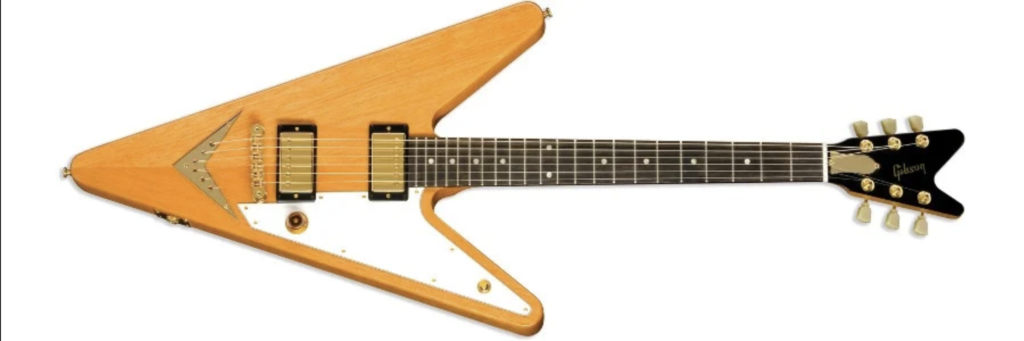
Origins and Design Evolution of the Reverse Flying V
The Classic Flying V
Before diving into the specifics of the Reverse Flying V, it’s essential to understand the origins of the original Flying V. The Flying V was first introduced by Gibson in 1958, designed by Gibson’s chief designer, Ray Dietrich, in an effort to create a guitar that was radically different from the traditional Les Paul or SG models. With its sharp, angular body shape and futuristic aesthetic, the Flying V was intended to stand out as a guitar that was ahead of its time.
Unfortunately, the Flying V was not an immediate commercial success in the 1950s due to its unconventional shape, which was not appreciated by traditionalists. However, as music evolved in the 1960s and 1970s, players began to gravitate toward the Flying V’s bold design, with rock stars like Jimi Hendrix, Albert King, and Randy Rhoads famously adopting it.
The Reverse Flying V Design
The Reverse Flying V came to be in the 1970s when Gibson reimagined the iconic design with a reverse layout. In the original Flying V, the top of the V was directed upward from the neck, but the Reverse Flying V flipped this design, making the point of the V face downwards toward the bridge. This reverse configuration immediately set the model apart from the traditional Flying V and turned it into a symbol of rebellion, influencing guitar culture for years to come.
The reverse configuration creates a more aggressive look and increases the guitar’s balance and ergonomics, allowing the player to feel more grounded with the instrument, especially when standing. It also made the Reverse Flying V a particularly popular choice for players in hard rock, heavy metal, and punk rock, who wanted a guitar that expressed their attitude and style both visually and sonically.
Key Features of the Gibson Reverse Flying V
Body Shape and Construction
The Reverse Flying V is built from premium tonewoods, making it both lightweight and resonant while providing the characteristic sustain and clarity that Gibson guitars are known for.
- Wood Type: Typically constructed with a Mahogany body, the Reverse Flying V offers a rich, warm tone with excellent sustain and depth. Mahogany is known for its slightly darker tonal characteristics, which balance well with the bright tones produced by the maple top or neck.
- Neck: The set-neck construction of the Reverse Flying V offers superior sustain, as the neck is glued directly into the body. The neck itself is usually made of Mahogany, providing a smooth, comfortable feel while adding to the warmth of the guitar’s sound.
- Scale Length: The standard 24.75-inch scale length gives the Reverse Flying V a smooth, vintage feel, with slightly shorter string tension that makes bending easier and the tone warmer compared to a longer scale length.
Electronics and Tone
The Reverse Flying V is equipped with high-output pickups that can produce both classic rock tones and heavy, aggressive distortion. The Gibson USA humbuckers—typically the Burstbucker or 490T/498T models—are the main attraction here.
- Pickups: The humbucker pickups are designed to deliver rich, full tones, with the 490T offering balanced mids and articulate highs that cut through the mix. The 498T model provides extra punch and a higher-output sound ideal for more aggressive tones, while the Burstbucker brings in the vintage P.A.F. (Patent Applied For) sound, characterized by its clear, punchy highs and smooth lows.
- Tone Control: The two-volume and two-tone knobs give players the ability to shape their sound, allowing for crystal-clear cleans or heavily distorted tones, making the Reverse Flying V suitable for clean rock solos, high-gain metal riffs, or bluesy overdrive.
Bridge and Hardware
The hardware of the Reverse Flying V has been engineered to provide tuning stability and sustain.
- Bridge System: The Reverse Flying V is commonly equipped with a Tune-o-Matic bridge combined with a stopbar tailpiece, which improves intonation and allows for more precise tuning. This bridge system offers a solid connection between the strings and the body, contributing to the guitar’s sustain and note clarity.
- Tuning Machines: The guitar is equipped with premium Grover tuners, which provide excellent tuning stability, ideal for live performances and intense playing. These tuners ensure that the Reverse Flying V stays in tune, even when subjected to heavy use.
Neck Profile and Playability
The neck profile of the Reverse Flying V is generally the Slim Taper neck found on many Gibson guitars, which is fast, comfortable, and ideal for fast shredding and lead work. The shorter scale length (24.75 inches) and flat, slim neck profile make the Reverse Flying V easy to play, even during fast, complex passages.
- Neck Shape: The Slim Taper profile is thinner and easier to navigate, perfect for lead players who require speed and precision. It provides a comfortable grip for both rhythm players and shredders.
- Fretboard: The fretboard is typically made of Rosewood or Ebony, which adds to the smooth playability and warm tone of the guitar.
The Reverse Flying V in Music and Popular Culture
The Reverse Flying V has become a symbol of rebellion and rock ‘n’ roll attitude, and has been embraced by iconic musicians across various genres. Its bold aesthetics and powerful tone made it a favorite of hard rock and heavy metal guitarists in particular.
Notable Players
- James Hetfield (Metallica): Hetfield, the legendary guitarist of Metallica, is perhaps the most famous player of the Reverse Flying V, using it for a large portion of the band’s early career. His aggressive playing style and powerful tone helped cement the Reverse Flying V as a go-to guitar for thrash metal.
- Kirk Hammett (Metallica): While Kirk is more famously associated with the ESP guitars, his contributions to the band with the Reverse Flying V are well-documented, especially during Metallica’s early days.
- Dave Mustaine (Megadeth): Mustaine, another metal icon, is also known for his use of the Flying V and the Reverse Flying V, cementing the guitar’s place in the thrash metal genre.
- Albert King: The blues legend was an early adopter of the Flying V, and although not the “reverse” version, his influence paved the way for future adopters of the V shape.
Cultural Impact
The Reverse Flying V was especially popular during the 1980s metal movement, where guitarists were in need of bold, high-output instruments that matched the intensity of their performances. Over the years, the guitar has come to represent power, precision, and non-conformity—qualities that have made it a favorite among guitarists looking to make a statement, both sonically and visually.