
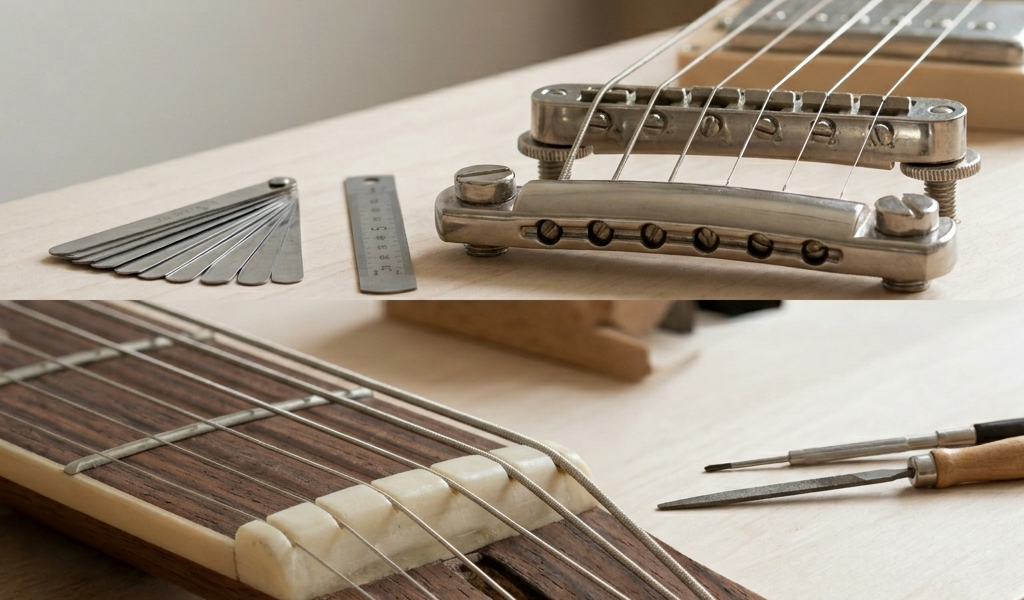
Most players obsess over pickups and wood, but two small areas do huge work every time you play:
- the nut
- the bridge
If your guitar won’t stay in tune, feels stiff, buzzes, or intonates badly, these are often the first places to inspect.
What the Nut Does
The nut sets:
- string spacing near the headstock
- string height at the first fret
- break angle toward tuners
- friction behavior during tuning/bends
In plain terms: nut quality can make a guitar feel easy and in tune—or like a constant fight.
What the Bridge Does
The bridge system sets:
- action and feel
- intonation
- break angle
- tuning stability (especially with tremolo systems)
- energy transfer into the body
On acoustics, saddle shape/material also strongly affects attack and clarity.
On electrics, bridge design affects response, sustain feel, and tuning behavior.
Nut Issues (and Symptoms)
1) Nut slots too high
Symptoms:
- Open chords sound sharp
- First-position playing feels stiff
- Extra pressure needed to fret
2) Nut slots too low
Symptoms:
- Open-string buzz
- Sitar-like rattle near first frets
3) Nut slots binding
Symptoms:
- “Ping” sound while tuning
- String goes sharp after bends or trem use
- Tuning jumps instead of moving smoothly
Bridge Issues (and Symptoms)
1) Action too high or low
- Too high: hard fretting, intonation drift from extra pressure
- Too low: fret buzz/choking bends
2) Poor intonation
- Notes in tune open, out of tune up neck
- Chords sound sour in higher positions
3) Tremolo imbalance (electric)
- Tuning instability after vibrato use
- Bridge not returning to neutral point
4) Saddle problems (acoustic)
- Uneven saddle bottom = poor contact, deadness, weak transfer
- Bad compensation = chronic intonation issues
Materials: Do They Matter?
Yes, but in context.
Nut materials (common)
- Plastic: cheap, variable quality
- Bone: traditional, stable, clear attack
- Tusq/synthetic: consistent, low friction, great practical option
- Brass/metal: brighter, less common in modern general setups
Bridge/saddle materials
- Acoustic saddles: bone/Tusq commonly preferred for clarity and consistency
- Electric bridges: steel, zinc, brass, etc. influence feel/response subtly, but setup matters more first
Material helps, but correct slot shaping and setup matter more than “premium” labels.
Quick Setup Priorities (Most Impact First)
- Nut slot height and smoothness
- Relief and action
- Intonation
- Bridge/trem balancing
- Material upgrades (only if needed)
Don’t buy parts before diagnosing setup basics.
Practical Upgrade Advice
Upgrade nut/bridge parts when:
- existing part is worn, poorly cut, or unstable
- tuning friction persists after proper setup/lubrication
- intonation/action range is limited by hardware quality
Skip upgrades when:
- guitar just needs a proper setup
- strings are old or wrong gauge
- tuning issues are from bad stringing technique
Common Mistakes
- Filing nut slots without measurement
- Lubing everything except actual friction points
- Adjusting bridge before relief
- Chasing hardware swaps instead of setup order
- Assuming expensive part = automatic fix
One Useful Rule
If tuning problems happen mostly after bends/trem use, check nut friction first.
If tuning problems happen mostly up the neck, check intonation and action first.
That single split catches a lot of issues quickly.
Bottom Line
The nut and bridge are the guitar’s control points for feel and stability.
When they’re cut, adjusted, and maintained correctly, almost everything gets easier:
- cleaner chords
- better intonation
- smoother tuning
- less playing fatigue
Before chasing bigger upgrades, make these two parts right.