
A dirty fretboard feels rough, looks dull, and can make a guitar feel older than it is.
The good news: proper fretboard cleaning is simple, fast, and low-risk—if you use the right method for the right wood.
First: Know Your Fretboard Type
This matters because not all fretboards are treated the same way.
- Unfinished/dark boards (rosewood, ebony, pau ferro):
Clean + occasional conditioning is usually appropriate. - Finished maple boards (gloss/satin clear coat):
Clean only. Do not oil/condition like rosewood/ebony.
If you’re unsure, check manufacturer specs first.
Tools You’ll Need
- Microfiber cloths
- Low-tack painter’s tape (optional, to mask pickups/body)
- Soft toothbrush or detailing brush
- Cotton swabs
- Naphtha (lighter fluid, instrument-safe cleaner) or dedicated fretboard cleaner
- Fretboard conditioner (for unfinished dark boards only)
- String winder/cutter (if restringing)
Optional:
- 0000 steel wool only with caution (or synthetic fret polishing pad)
Step-by-Step: Cleaning the Fretboard
1) Remove or loosen strings
For a full clean, remove strings.
(If doing quick maintenance, loosen and move aside.)
2) Dry wipe first
Use a microfiber cloth to remove loose dust and grime.
3) Clean stubborn dirt
Put a small amount of naphtha on cloth or swab (not directly on guitar).
Rub between frets gently. Use toothbrush for grime near fret edges.
- Work in small sections
- Don’t flood the board
- Keep liquids away from finished top and binding seams
4) Wipe fully dry
Use a clean microfiber cloth and remove all residue.
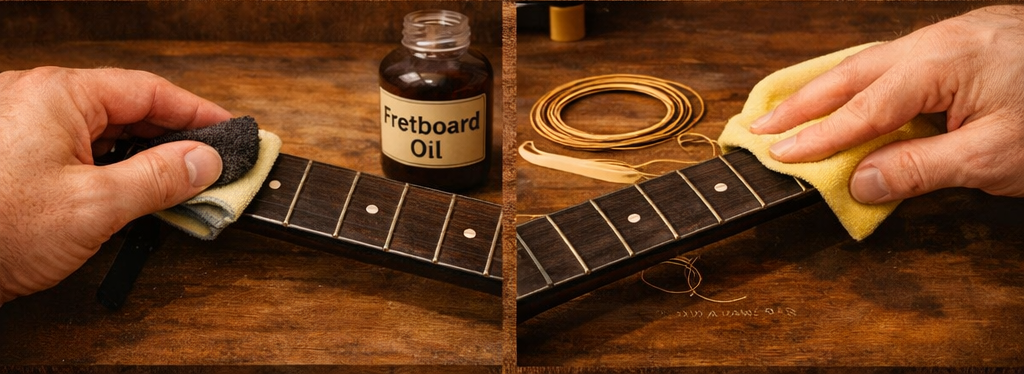
Conditioning (Only for Unfinished Dark Fretboards)
5) Apply a tiny amount
Use a few drops of fretboard conditioner on a cloth, then spread thinly.
You want a light film, not a soaked board.
6) Let it sit briefly
Wait 2–5 minutes (follow product directions).
7) Buff off excess
Wipe until the board feels dry, smooth, and not oily.
If it looks wet, you used too much—keep buffing.
If You Have a Maple Fretboard
For finished maple:
- Clean with slightly damp microfiber or guitar-safe cleaner
- Dry immediately
- No lemon oil/conditioning oils
Think “clean finish,” not “feed wood.”
How Often Should You Do This?
- Light clean: every string change
- Conditioning (unfinished boards): about 1–3 times per year depending on climate/use
Over-conditioning is worse than under-conditioning.
What to Avoid
- Household cleaners (especially ammonia products)
- Vegetable/mineral oils not intended for instruments
- Soaking the board
- Aggressive scraping with metal tools
- Excessive steel wool near pickups (magnetic particles can cause problems)
Quick Signs Your Board Needs Care
- Looks dry/chalky
- Feels rough or grimy
- Visible dirt lines near frets
- String bending feels scratchy
Final Check Before Restringing
- Board should be clean, dry, and smooth
- No oily residue left behind
- Frets free of loose debris
Then restring, tune, and enjoy the “new guitar” feel.
Related Articles
- How to Do a Basic Acoustic Guitar Setup (Beginner Luthiery Guide)
- How to Set Up a Steel-String Electric Guitar (Beginner Luthiery Guide)
- Why Notes Go Sharp When Fretting (And How to Fix It)